
Online and E-Safety
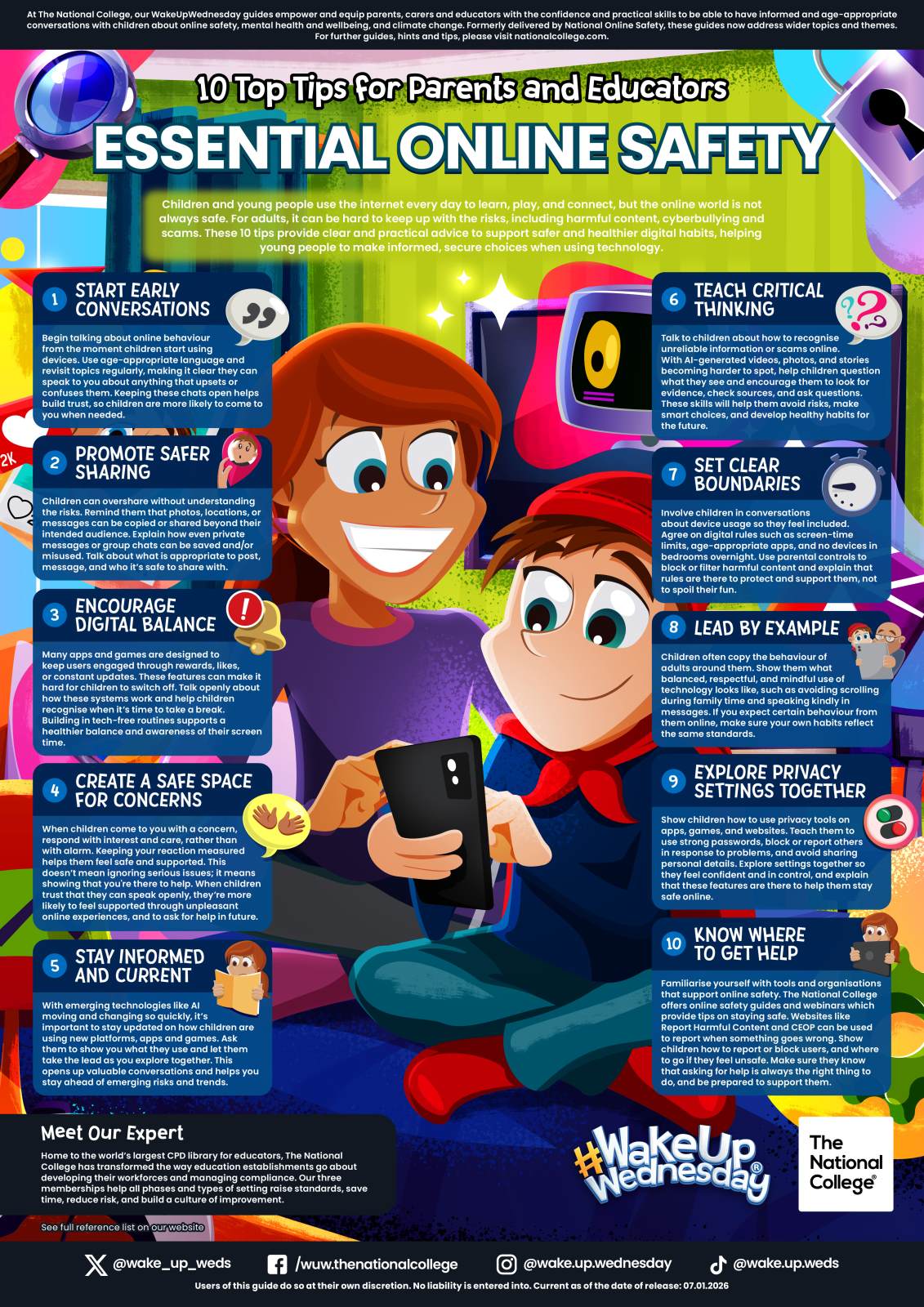
Online safety is an integral part of children’s education in today’s digital world and is embedded in their learning at school. We also want to help our parents and children improve their own understanding of online safety issues so they can learn to use the internet and all digital media in a safe and secure way.
Online safety at a simple level means being safe on the internet. Some people also include the safe use of technology in this as well. The pace at which technology is evolving can make it difficult to know what to include when talking about the safe use of the internet.
At Five Lanes, we play an important role in inspiring young people and shaping their futures, but we also have a responsibility to safeguard children's wellbeing, in both the classroom and online. Online abuse can take shape in a number of forms including:
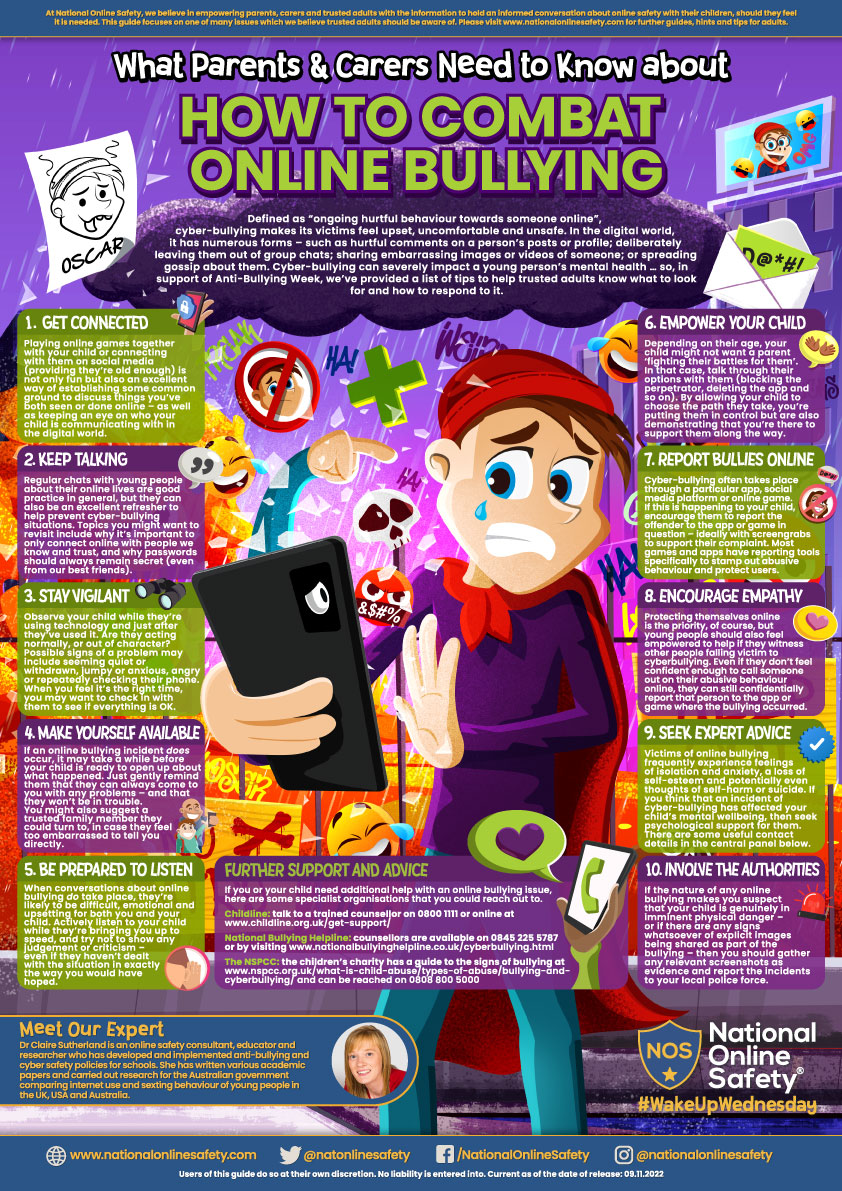
- Bullying/cyberbullying
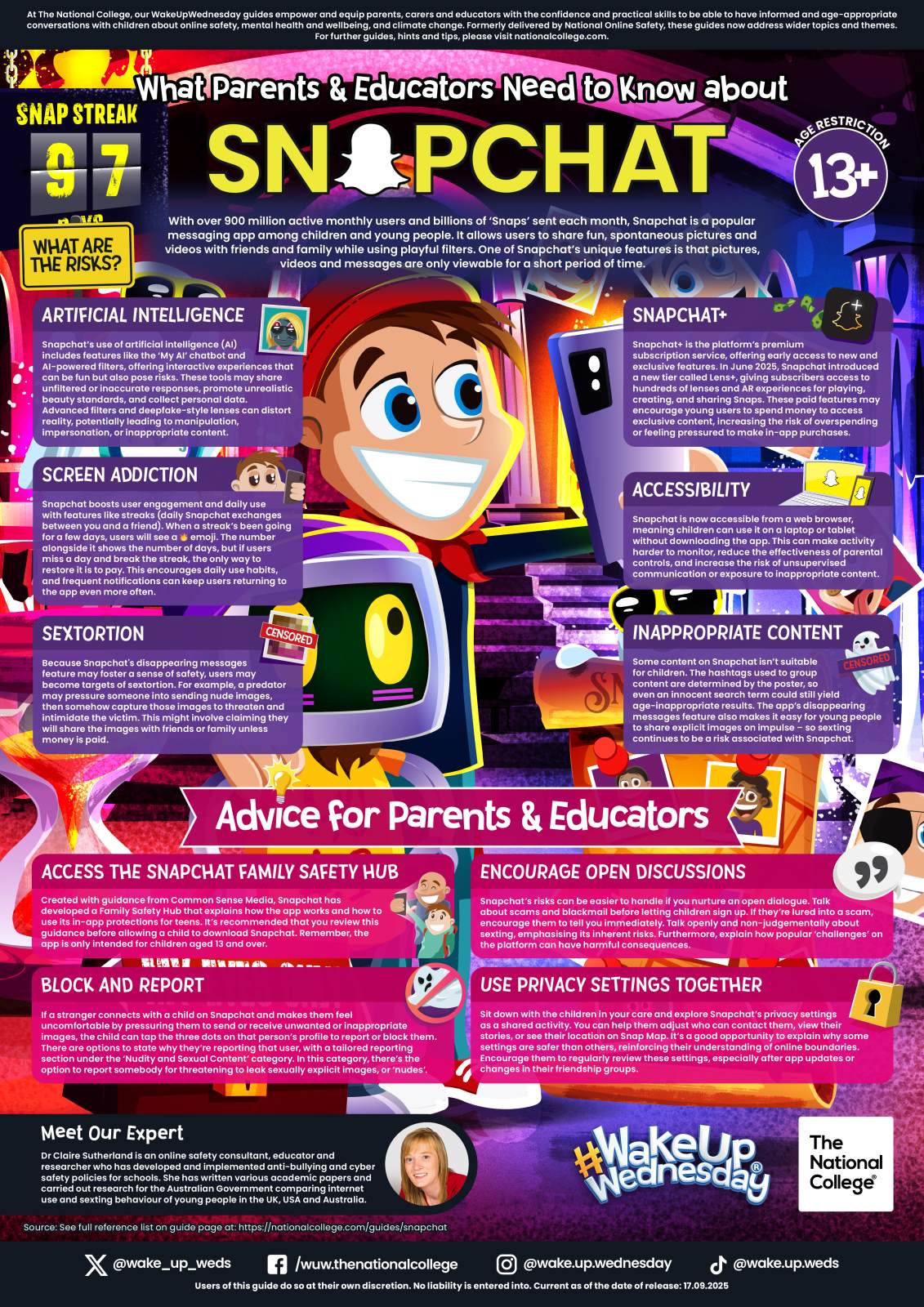
- Sexual Exploitation
- Grooming
- Emotional Abuse
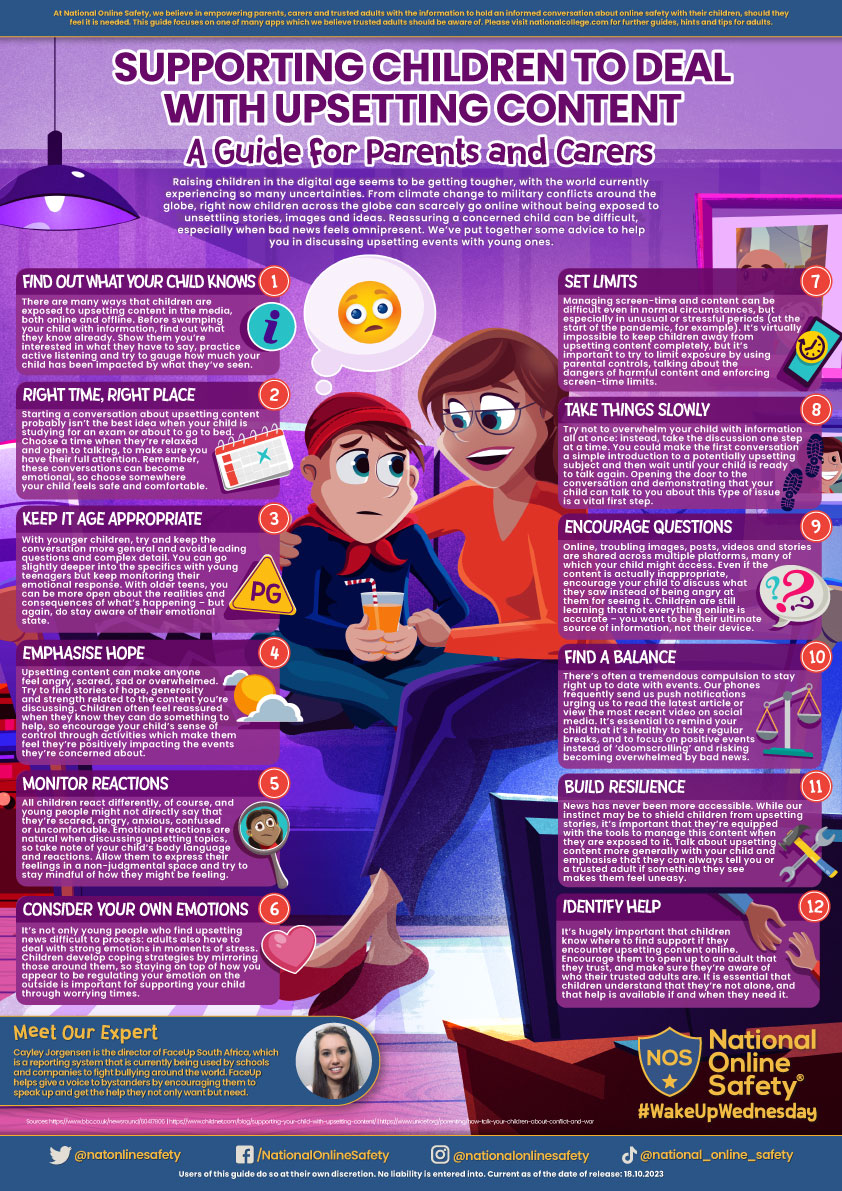
Bullying occurred in schools long before the introduction of social media, but the very nature of cyber bullying mean that taunts cannot be left behind in the playground. Hurtful messages can be received at any time of day via social media, meaning online bullying can potentially have a more serious effect on children's mental health.
It is therefore vital that as a school we are able to educate children about e-safety both in the classroom and at home so that children know how to deal with cyber bullying and can spot the signs of online predators.
Parental Support At Home
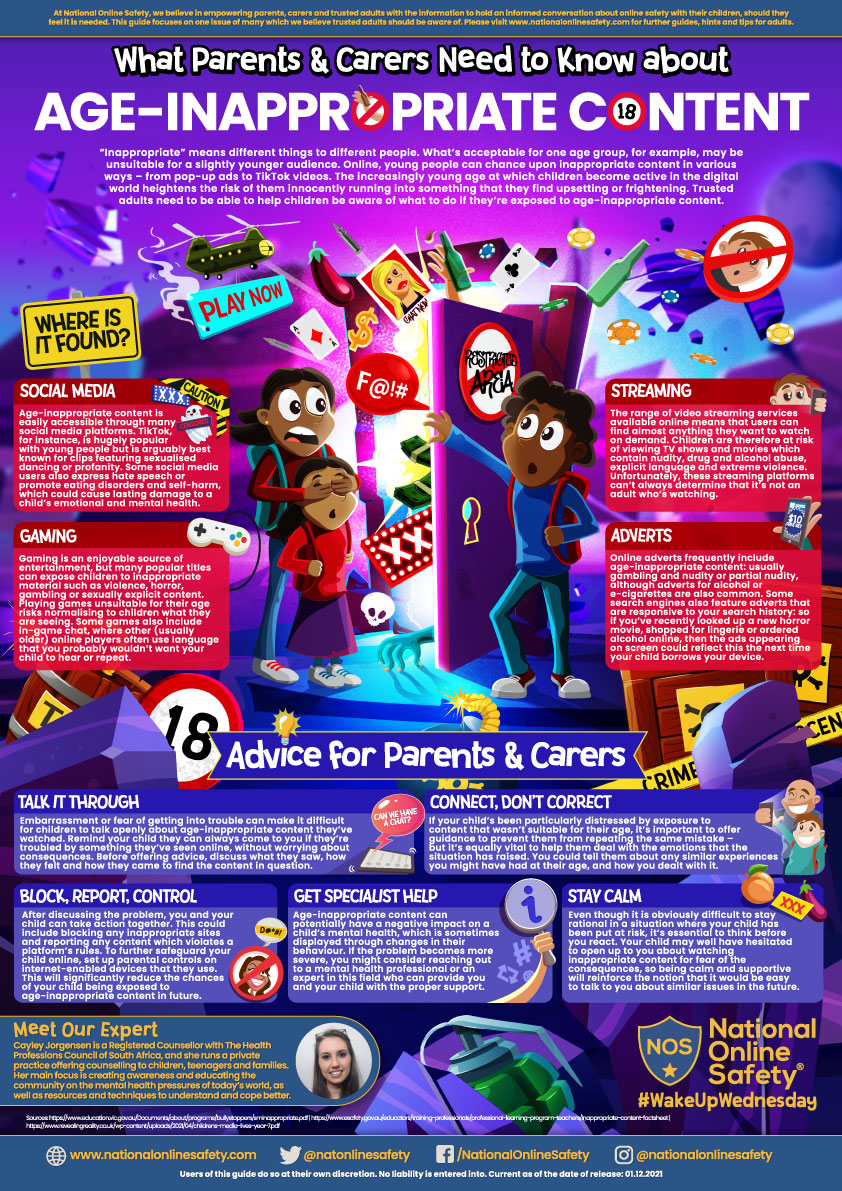
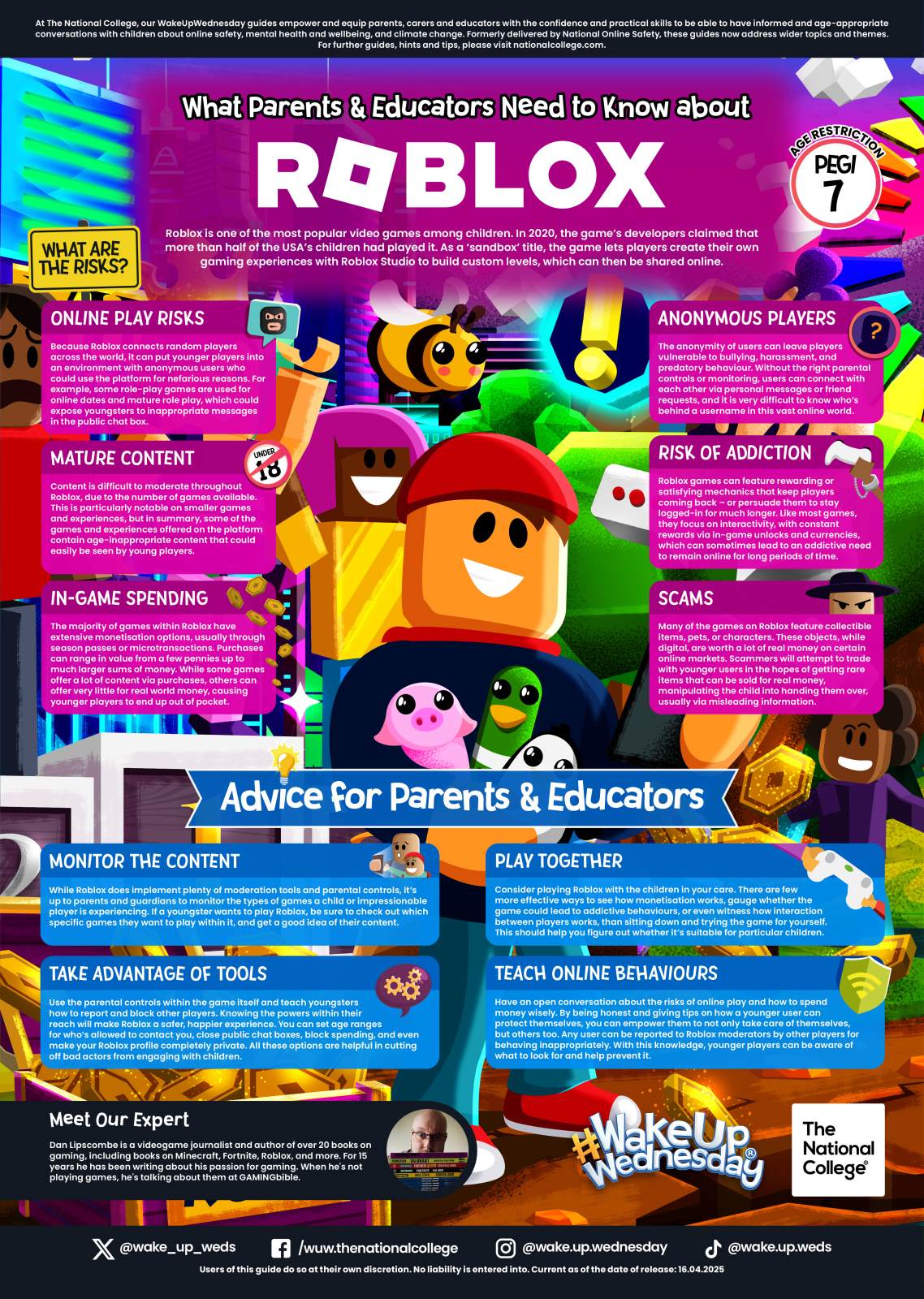
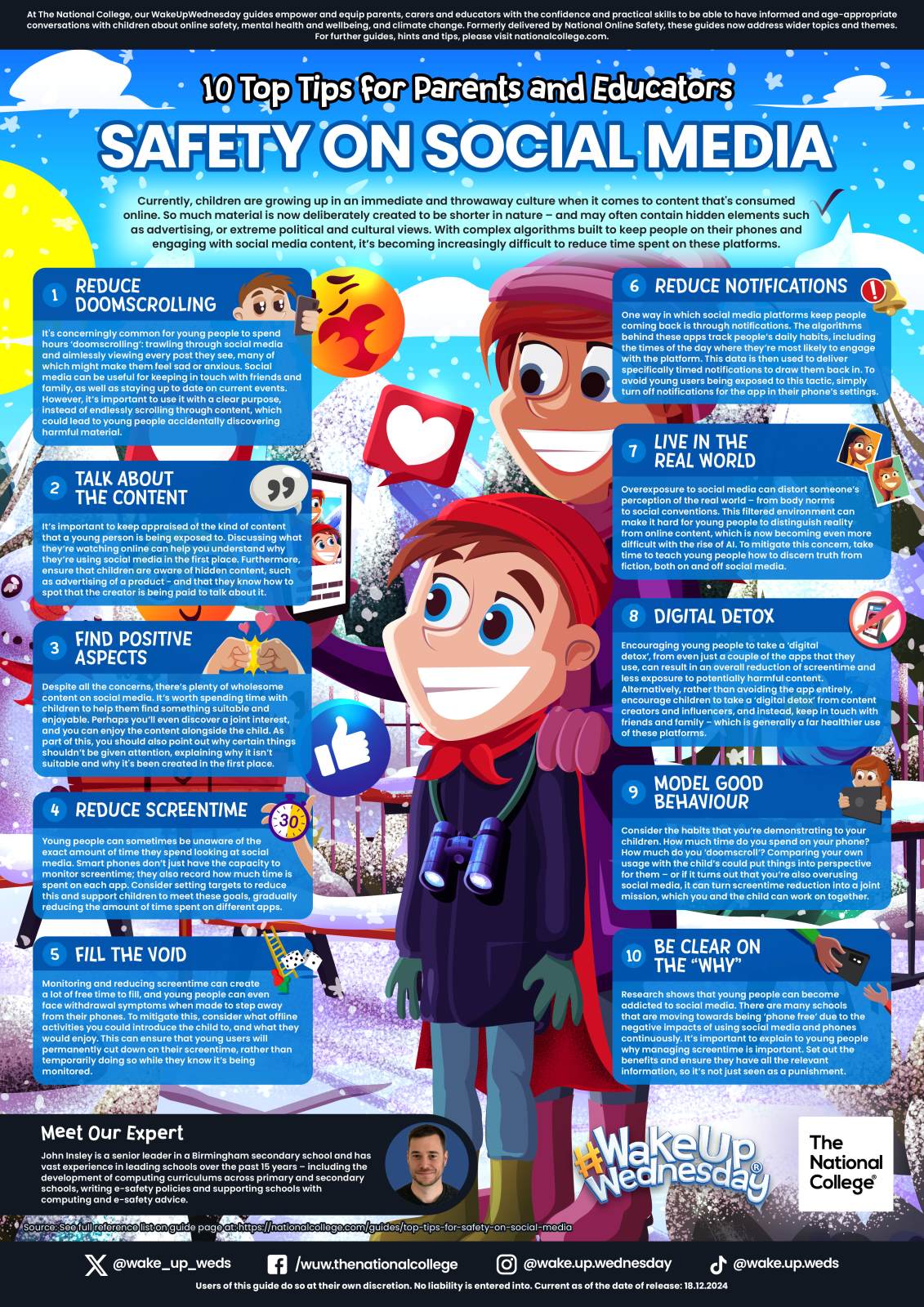
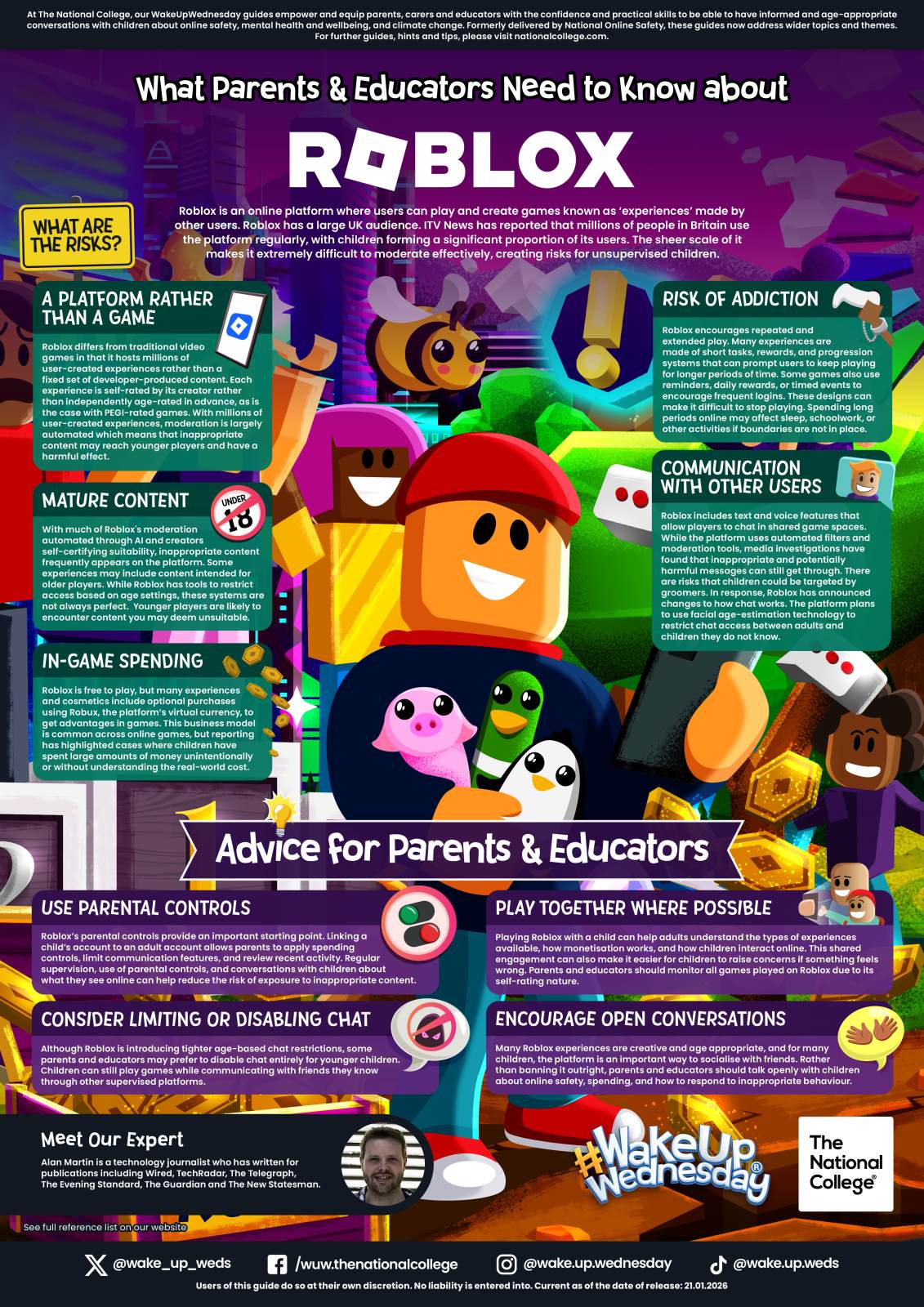
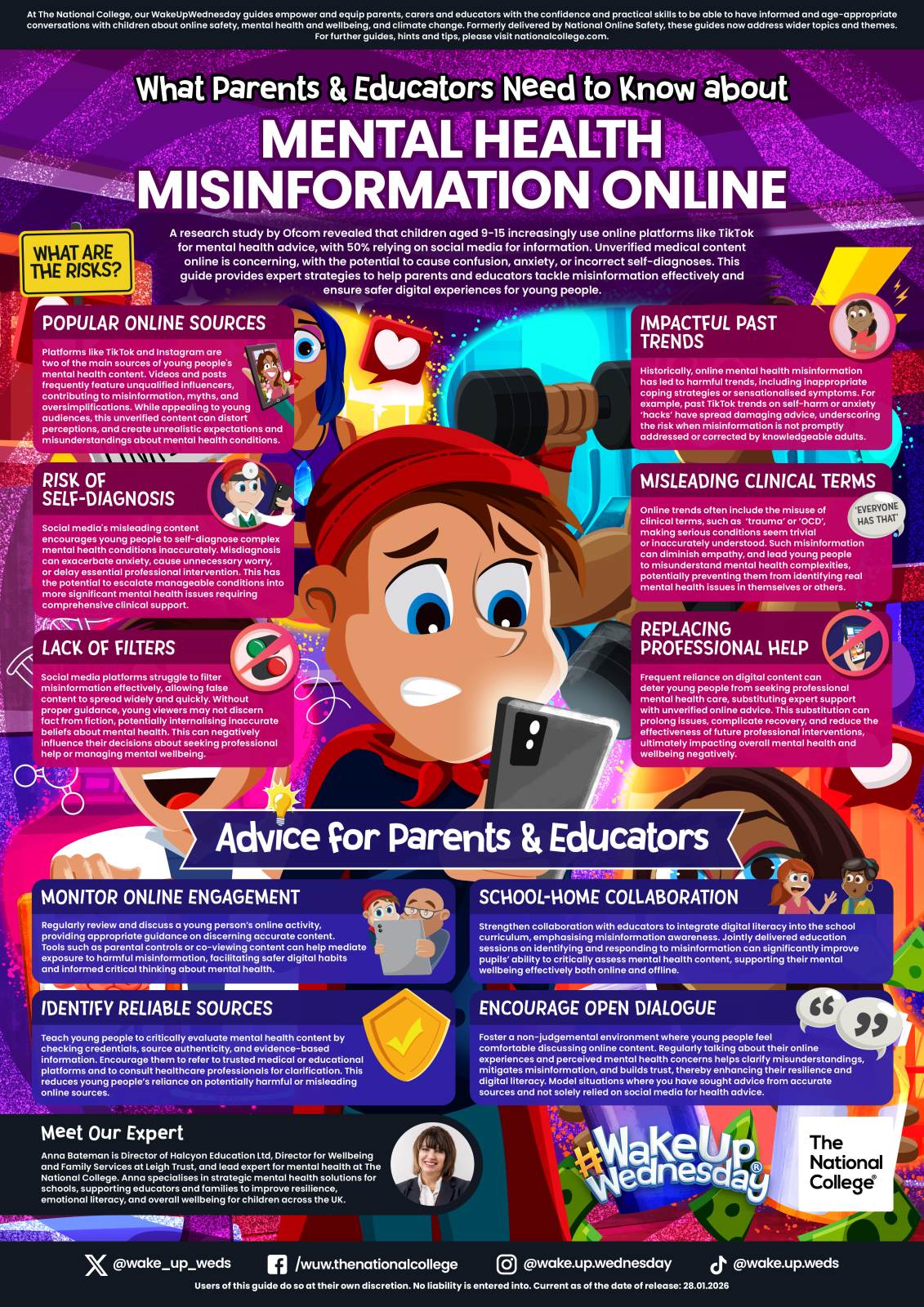
As a parent you'll know how important the internet is to children - they use it to learn, play, socialise and express themselves. It's a highly creative place of amazing opportunities. But the technology children use every day can seem a bit daunting and you might worry about the risks your child can face online - such as bullying, contact from strangers or the possibility of them seeing illegal or inappropriate content.
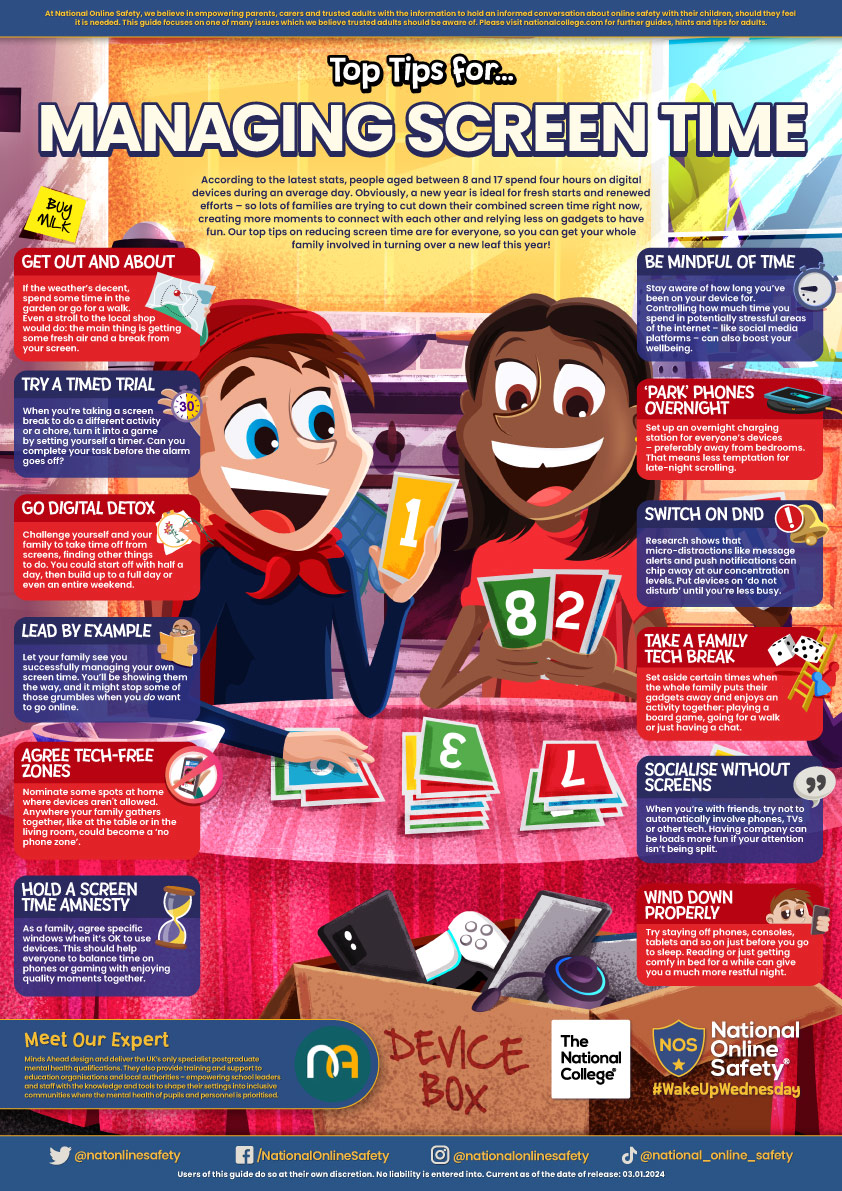
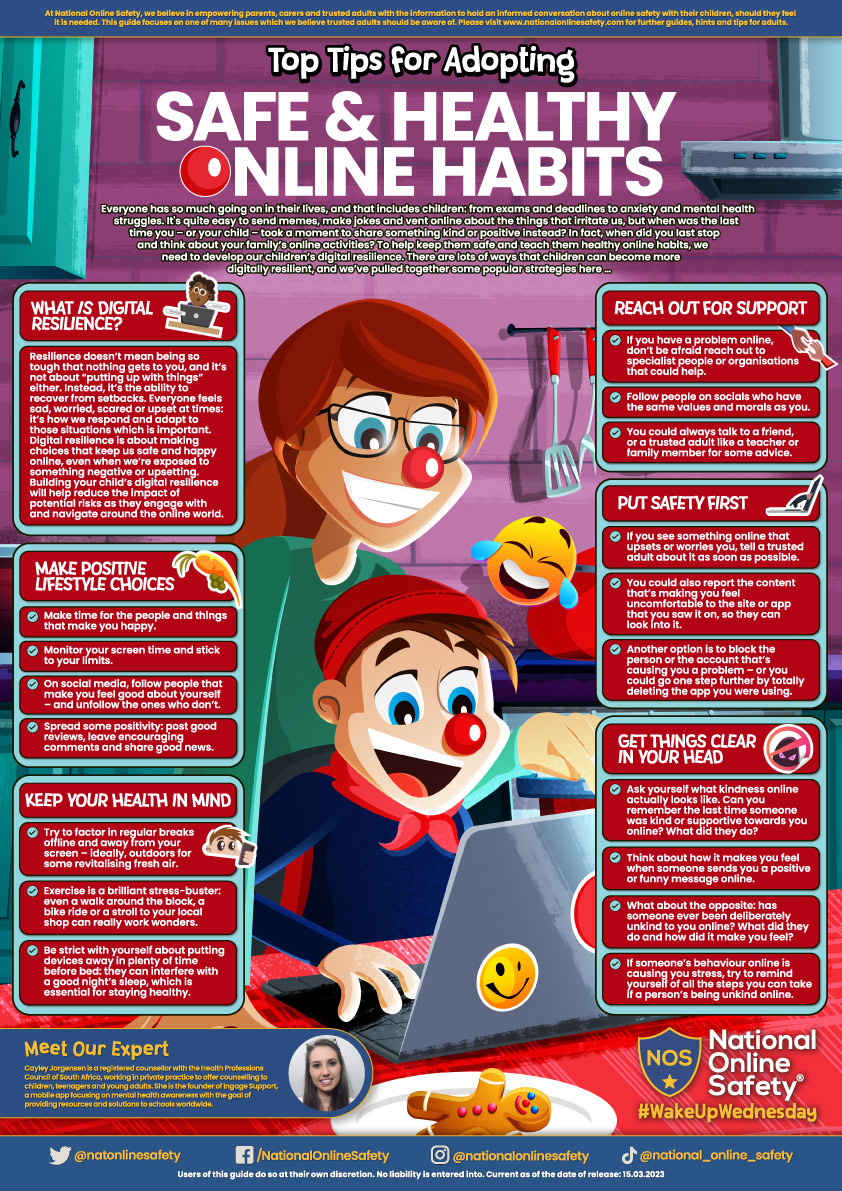
You can engage with your children regarding their use of the internet while at home. Here are some conversation starter ideas from www.childnet.com
- Ask your children to tell you about the sites they like to visit and what they enjoy doing online.
- Ask them about how they stay safe online. What tips do they have for you, and where did they learn them? What is OK and not OK to share?
- Ask them if they know where to go for help, where to find the safety advice, privacy settings and how to report or block on the services they use.
- Encourage them to help. Perhaps they can show you how to do something better online or they might have a friend who would benefit from their help and support.
- Think about how you use the internet as a family. What could you do to get more out of the internet together and further enjoy your lives online
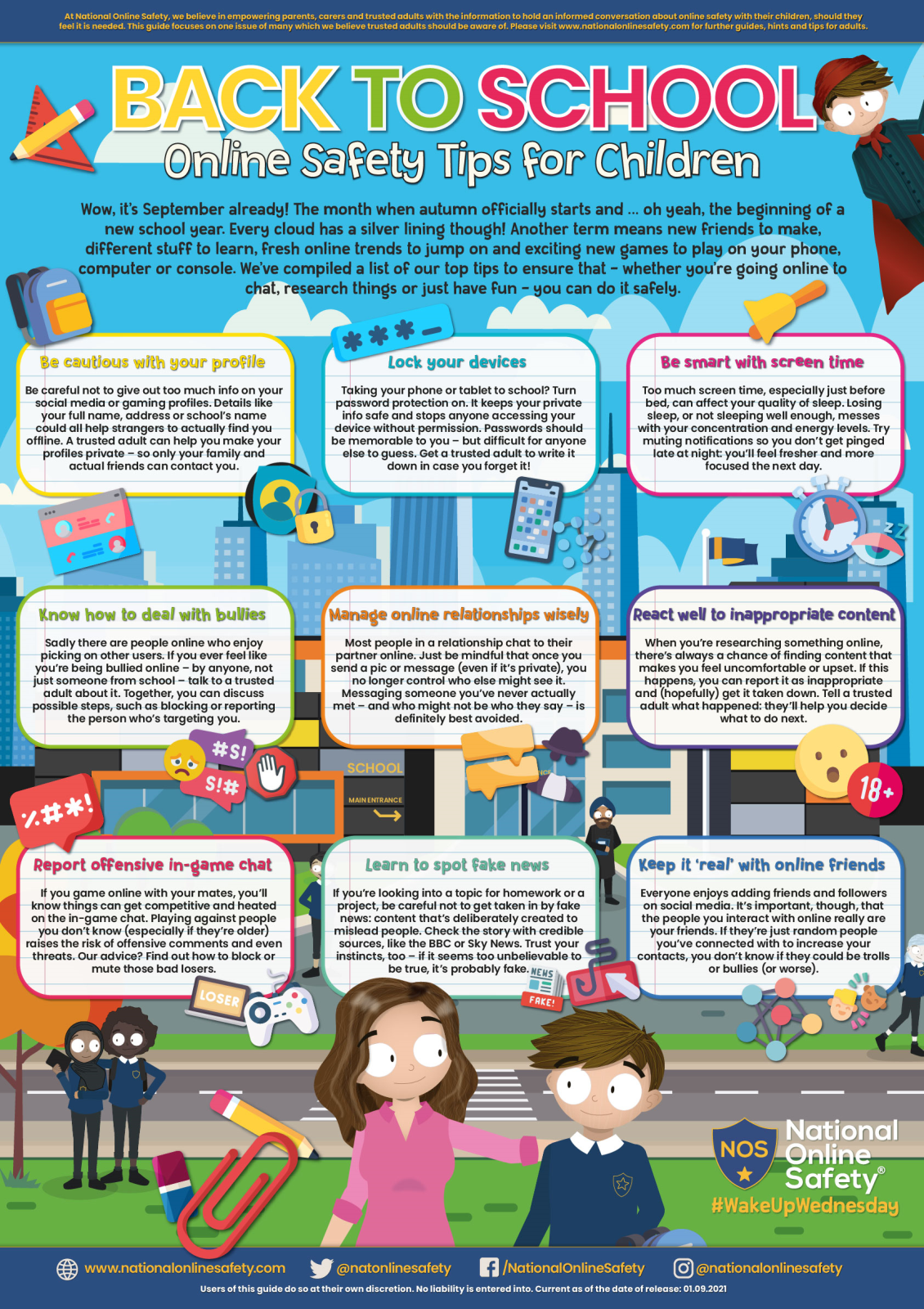
Five tips on how to keep children safe online
- Privacy settings: ensure privacy settings are enabled on children's devices and apps to give them more protection online.
- Do you know them?: ensure that children are only accepting friend requests or speaking to people they know and trust.
- Downloading files: never let children download files from unknown sources and make sure they ask permission before they try to download something
- Knowledge: Give children training to ensure they know what to do if they are being bullied or feel unsafe whilst online.
- Speak to someone: make sure children know who they can talk to about cyber bullying or if they are unsure about something online.
Parent Resources
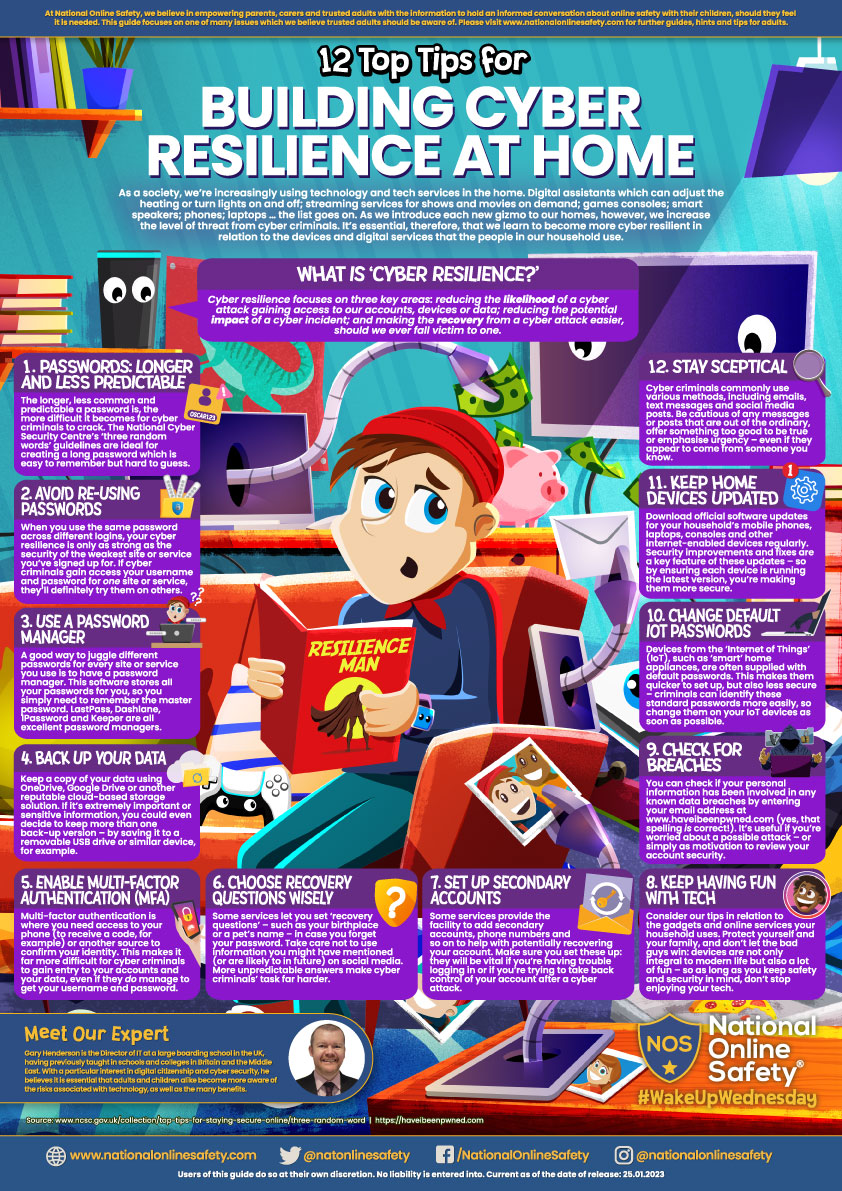
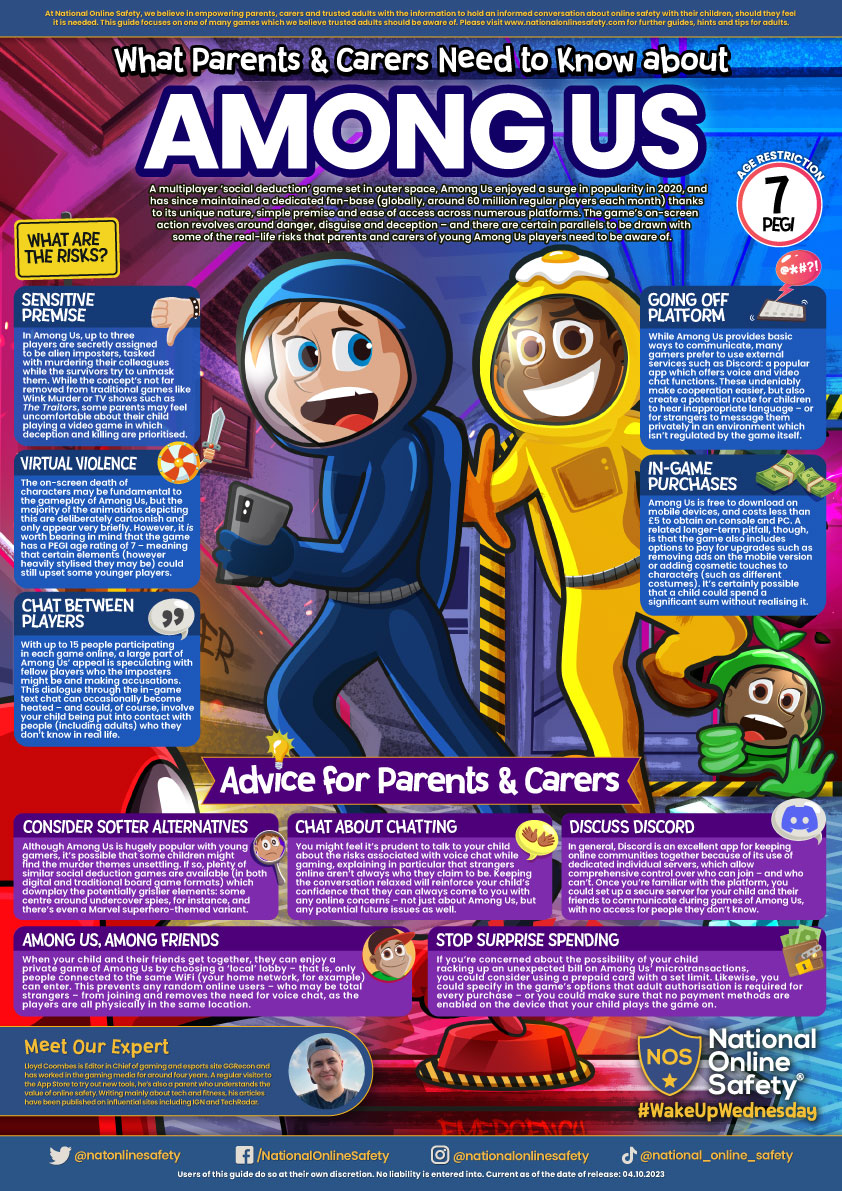
To try and help parents with the fast moving and changing world of internet and social media we've suggested a few internet sites which are fantastic resources. They contain information on different types of social media and how to help keep children safe.
Parent Guides